
Laser Dentistry Explained: No Drill, Less Pain

For many people, the sound of a dental drill is enough to trigger anxiety. Fortunately, modern technology has transformed the patient experience. One of the most exciting advances in modern dental care is Laser Dentistry.
At Advanced Dental Center in Norwalk, CT, laser technology helps us perform many procedures more comfortably and efficiently. Whether you're dealing with gum disease, cosmetic concerns, or certain restorative treatments, laser dentistry may offer a gentler alternative to traditional methods.
If you've ever wondered, "Does laser dentistry hurt?" or "Can laser dentistry replace the drill?" this guide will explain everything you need to know.
What Is Laser Dentistry?
Laser dentistry uses highly focused light energy to treat soft and hard tissues inside the mouth.
Depending on the procedure, lasers can:
Remove decayed tissue
Reshape gums
Reduce bacteria
Treat periodontal disease
Improve healing
Minimize bleeding
Unlike traditional tools, lasers often work without direct contact, creating a more comfortable experience for many patients.
How Does Laser Dentistry Work?
A dental laser emits concentrated light energy that precisely targets specific tissue while preserving surrounding healthy structures.
Visual Comparison
Traditional Dentistry
Drill
Mechanical vibration
Heat and pressure
More bleeding in soft tissue procedures
Laser Dentistry
Focused light energy
Minimal vibration
Greater precision
Reduced bleeding and swelling
This precision is one reason laser treatments are becoming increasingly popular.
Does Laser Dentistry Hurt?
The Short Answer: Usually Less Than Traditional Dentistry
One of the biggest advantages of laser dentistry is patient comfort.
Many patients experience:
Less discomfort
Less anxiety
Less bleeding
Reduced need for anesthesia
Faster recovery
For some procedures, patients may not require local anesthetic at all.
Why It Feels More Comfortable
Lasers cause less trauma to surrounding tissues compared to drills and scalpels.
Benefits include:
Reduced inflammation
Less tissue damage
Minimal pressure sensations
Decreased post-treatment soreness
Benefits of Laser Dentistry
1. Reduced Need for Drills
Many patients dislike:
The sound
The vibration
The pressure
Laser dentistry can reduce or eliminate drilling for certain procedures.
2. Less Bleeding
Laser energy seals blood vessels during treatment.
This often results in:
Cleaner procedures
Less bleeding
Improved visibility for dentists
3. Faster Healing Time
Patients often experience:
Reduced swelling
Less discomfort
Faster tissue recovery
This can mean less downtime after treatment.
4. Increased Precision
Lasers target only the necessary tissue.
This helps preserve:
Healthy gums
Healthy enamel
Surrounding structures
5. Lower Risk of Infection
Lasers naturally disinfect treatment areas by reducing bacteria.
This may improve healing and reduce complications.
Common Procedures Performed with Laser Dentistry
Gum Disease Treatment
Lasers can:
Remove infected tissue
Reduce bacteria
Promote gum healing
Many periodontal patients appreciate the comfort benefits.
Gum Contouring
Laser gum reshaping can improve smile aesthetics with minimal discomfort.
Cavity Detection and Treatment
Some lasers can assist in removing decay while preserving more healthy tooth structure.
Cold Sore and Ulcer Treatment
Lasers may reduce discomfort and accelerate healing.
Frenectomy Procedures
Lasers are frequently used to treat tongue-tie and lip-tie with minimal bleeding and faster recovery.
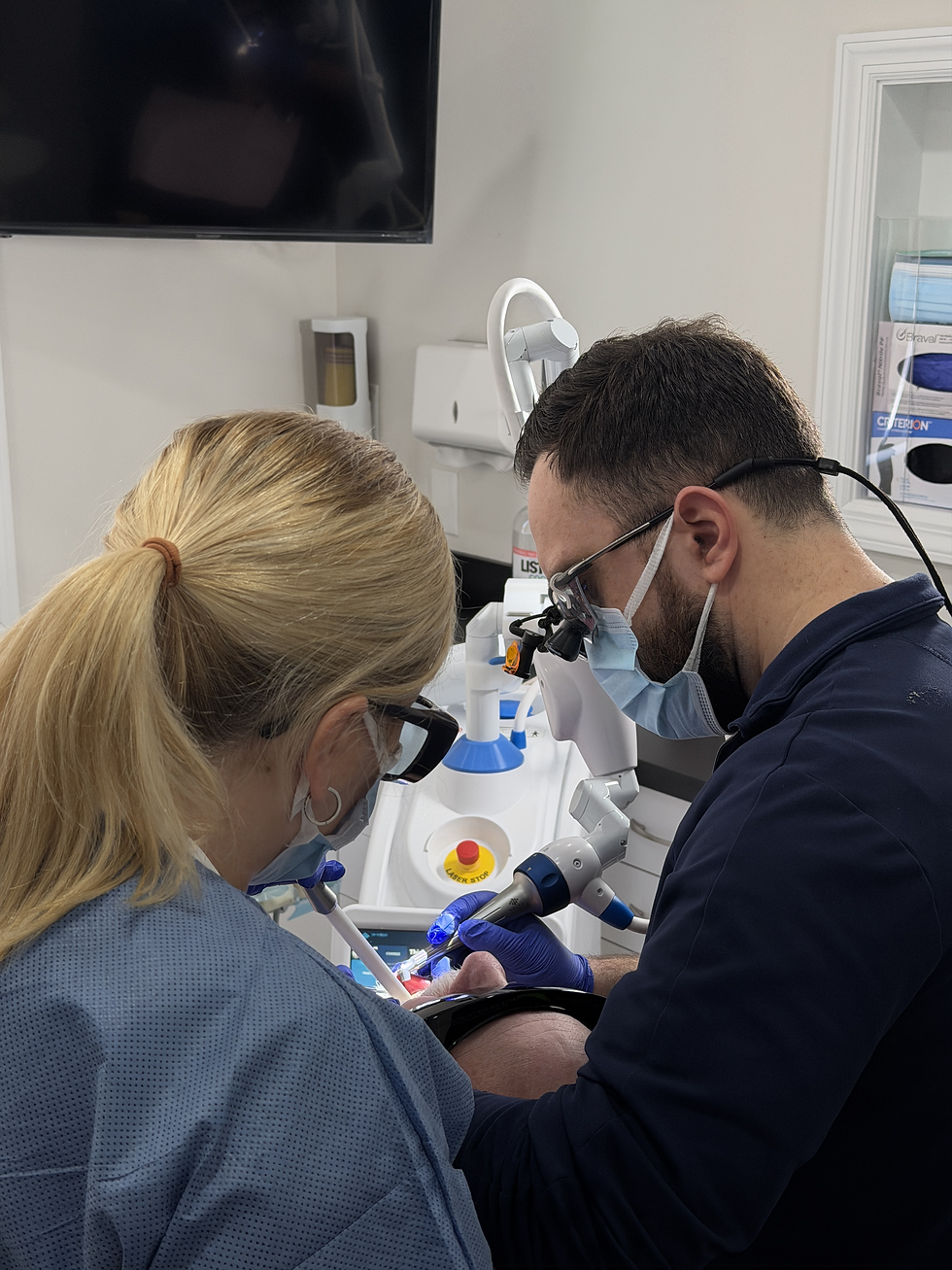
Laser Dentistry vs Traditional Dentistry
Feature | Traditional Dentistry | Laser Dentistry |
Drill Use | Often | Reduced |
Bleeding | Moderate | Minimal |
Healing Time | Standard | Faster |
Anesthesia | Frequently Needed | Sometimes Reduced |
Comfort | Good | Often Improved |
Precision | High | Very High |
Who Is a Good Candidate for Laser Dentistry?
You may benefit from laser dentistry if you:
Experience dental anxiety
Have sensitive teeth
Need gum treatment
Want minimally invasive care
Prefer advanced technology
A consultation can determine if laser treatment is appropriate for your specific needs.
Why Patients Love Laser Dentistry
Patients frequently report:
Less Fear
No loud drilling sounds can make appointments less stressful.
Better Recovery
Many patients return to normal activities quickly after treatment.
More Comfortable Experience
Reduced swelling and discomfort contribute to a better overall experience.
FAQ — Laser Dentistry
Does laser dentistry hurt?
Most patients report less discomfort compared to traditional dental procedures. Many laser treatments require little or no anesthesia.
Is laser dentistry safe?
Yes. When performed by trained dental professionals, laser dentistry is considered safe and effective.
Can laser dentistry replace dental drills?
For some procedures, yes. However, traditional instruments may still be necessary for certain treatments.
Does laser dentistry heal faster?
Many patients experience reduced swelling and faster healing compared to conventional methods.
Is laser dentistry more expensive?
Costs vary depending on the procedure, but many patients find the added comfort and efficiency worthwhile.
Conclusion
Laser dentistry is changing the way patients experience dental care. By reducing discomfort, minimizing bleeding, and improving healing times, this advanced technology helps make many treatments more comfortable and less intimidating.
If you've avoided dental treatment because of anxiety about drills or discomfort, laser dentistry may be the solution you've been looking for.
👉 Schedule a consultation with Advanced Dental Center in Norwalk, CT today and discover how laser dentistry can help you achieve a healthier smile with greater comfort.


Comments